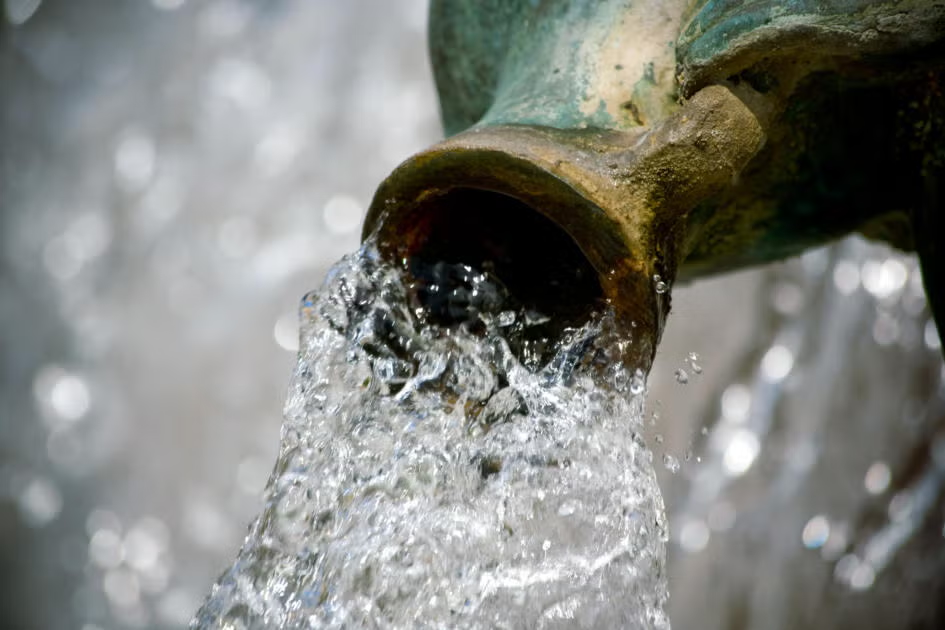
On the final, climactic day of Sukkot, known as the Last Great Day of the Feast, a vibrant and meaningful ritual unfolded at the Temple. As the morning sacrifice was prepared, a priest led a joyous procession, accompanied by music, to the Pool of Siloam. There, he drew water into a golden pitcher. Simultaneously, another group journeyed to the nearby Kidron Valley at a place called Motza, where they gathered willow branches. Amid the resounding blasts of priests’ trumpets, these branches were placed on either side of the altar of burnt offering, their tips bent inward to form a leafy canopy.
The ceremony was carefully timed. The priest who went to Siloam returned just as his fellow priests carried the sacrificial portions to the altar. Entering through the Water Gate—named for this very ritual—he was greeted by a threefold trumpet blast. The priest then ascended the altar’s ramp, turned left, and approached two silver basins with narrow openings: the eastern basin, slightly wider, for wine, and the western, narrower one, for the Siloam water. As he poured the water and wine simultaneously, the people shouted, “Raise your hand!” to ensure the water was indeed poured into the basin, which channeled it to the altar’s base.
Source: Edersheim, Alfred. The Temple: Its Ministry and Services, Chapter 14.
Having visited Israel, one can appreciate the profound significance of water in its arid climate—a matter of life and death. Historically, King David captured Jerusalem by cutting off its water supply. Visitors today can walk through Hezekiah’s Tunnel, an ancient engineering marvel built to channel water into the city.
During one memorable Feast of Tabernacles, Jesus attended this water libation ceremony. As recorded in John 7:37, on the last and greatest day of the Feast, He stood and proclaimed in a loud voice, “If anyone is thirsty, let him come to Me and drink. Whoever believes in Me, as the Scripture has said, streams of living water will flow from within him.” In this moment, Jesus not only fulfilled the Scriptures but also fulfilled the Jewish traditions of Sukkot, presenting Himself as the source of eternal life.
© 2025 B Arnold Stein

Leave a Reply